Carve Quest
- 3.6
- Rating
- 1.00M
- Installs
- Free
- Price

 Analysis by App-foxy
I spent time with Carve Quest as a light adventure game, and my first impression was that it aims for an easygoing kind of progress rather than a demanding, high-pressure challenge. That makes it a natural fit for short breaks, especially when I want something more interactive than scrolling but less intense than a competitive game. It is free to start, developed by Rollic Games, and available to a broad audience with an Everyone age rating.
The important distinction is that “free” describes access, not necessarily the complete cost of playing. The game includes optional in-app purchases priced from $1.99 to $99.99 per item. I would therefore approach it as a free download that lets you decide later whether spending improves your experience. That is a reasonable model for a casual adventure title, but it also means I would not treat every later convenience or offer as essential before understanding how comfortably the free experience works for you.
How the relaxed adventure loop feels in practice
The appeal here is the sense of moving through a compact, rewarding journey without needing to prepare for a long session. I found that kind of design useful when I had only a few minutes available: I could open the game, make some progress, and leave without feeling that I had abandoned a complicated campaign. The carving theme gives the experience its identity, separating it from ordinary runners, match games, and large role-playing adventures.
You May Also Like

 Blood Strike: 2.5 Anniversary
Blood Strike’s Loadouts Turn Every Drop Into a Tactical Gamble
A close look at Blood Strike’s custom loadouts: how fast access to signature weapons reshapes its battle royale rhythm, rewards preparation, and narrows the gap between fights.

 Pandora - Music & Podcasts
Pandora’s Music Is Easy to Start, but Harder to Recover
Pandora’s strength is its low-effort path from a seed to a station. Its weak spot is how much confidence it asks you to place in connection, setup, and quiet recovery.

 8 Ball Pool
 Is Built on Rivalries, Rematches, and Routine
A close look at the rivalries, rematches, shared routines, and unanswered safety questions that turn a quick pool match into a persistent mobile community.

 Samsung Music
’s Quiet Strength Is Playing What You Already Own
Its reach comes less from spectacle than from dependable access to a personal library. That simplicity is both the app’s strongest retention engine and its ceiling.

 AccuWeather: Weather Radar
AccuWeather Review: A Quick, Clear Forecast for Everyday Decisions
For everyday plans, the best forecast is the one you can understand quickly. AccuWeather makes rain timing, radar, and local conditions easy to act on, with a few trade-offs.

 Hill Climb Racing
Why Hill Climb Racing Still Turns Crashes Into One More Run
A tiny car, a bumpy hill and one more upgrade: Hill Climb Racing keeps resurfacing because its simple chaos makes every near-miss feel personal.
More From Our News Desk



That focus also shapes the game’s audience. Someone looking for a calm activity with a visible sense of advancement is more likely to enjoy it than someone seeking deep combat, a large open world, or a story built around lengthy dialogue. Carve Quest works best when the pleasure comes from the action itself and from gradually seeing a task take shape. If you need constant novelty or highly demanding mechanics, the relaxed pace may feel too gentle.
One practical way I would use it is during a commute, while waiting for an appointment, or at the end of the day when I do not want a game that requires full concentration. I would avoid opening it when I am specifically looking for a substantial evening session with complex strategy. Its value is strongest as a small, repeatable escape rather than as a replacement for a major console-style adventure.
What the free entry point really offers
Because there is no upfront purchase price, trying the game is straightforward. You can judge the basic feel before committing money, which matters more here than a polished description. I recommend playing several ordinary sessions first and paying attention to whether the core activity remains enjoyable without buying anything. If the free loop already feels satisfying, optional spending can remain exactly that: optional.
The purchase range deserves a careful look before anyone taps a confirmation button. A $1.99 item and a $99.99 item represent very different decisions, even though both appear under the same in-app-purchase label. I would set a personal limit in advance, particularly if the game is being used by a child or shared on a family device. The Everyone rating describes the intended age suitability, but it does not remove the need for sensible purchase controls.
I also would not assume that paying automatically makes the game more enjoyable. In a relaxed title, the main question is whether a purchase removes an annoyance or adds something you genuinely want. If it only makes you feel pressured to keep spending, the free version is the better value. The absence of an upfront charge gives you room to make that judgment without paying simply to discover whether the basic design suits you.
Small habits that make the experience easier to judge
My first useful tip is to separate enjoyment from progress speed. A game can feel rewarding because each session is pleasant, even if advancement is not especially fast. I would avoid measuring the experience only by how quickly I unlock or complete things. Instead, ask whether the carving activity itself remains relaxing when progress slows. That test helps reveal whether you like the game or merely like the first burst of novelty.
A second tip is to use short sessions deliberately. Rather than leaving the game open while distracted, I would play with one modest goal in mind, then stop. This makes it easier to notice whether the game gives a satisfying endpoint or simply encourages another repetition. That distinction matters for anyone who wants a calming break instead of an endless habit.
A third trade-off is worth watching: convenience purchases can change the rhythm that makes a casual game appealing. If waiting, repeating, or working through a slower section is part of the intended pace, removing every pause may make the experience quicker but less relaxing. I would only spend when the change improves the way I personally want to play, not because a prompt makes the purchase look urgent.
Where it sits beside other adventure games
Compared with a story-heavy adventure, this is the lighter choice. Traditional narrative adventures usually ask for more attention, offer longer scenes, and build their appeal around characters or plot. Carve Quest is better suited to someone who wants an immediate activity with less commitment. The trade-off is that players who value a memorable storyline may find the experience less emotionally substantial.
Compared with an action-focused adventure, it should appeal to people who prefer a calmer pace. Action alternatives can offer sharper reflex tests, more pressure, and stronger excitement, but they may be tiring when you only want to unwind. Here, the attraction is the carving-centered identity and the feeling of a manageable journey. If challenge and adrenaline are your priorities, another adventure game will probably give you more.
It also differs from purely decorative or idle games. Carve Quest asks you to participate rather than simply watch numbers rise, yet it does not demand the concentration of a complex strategy title. That middle position is its clearest use case. I would recommend it to a player who wants some agency and progress but does not want to learn a large set of systems before having fun.
Who is likely to get the most value
The strongest audience is casual players who enjoy tactile, themed activities and prefer a gentle sense of achievement. It can also suit someone returning to mobile gaming after a break, because the free entry point lowers the risk of choosing the wrong game. The broad age rating makes it easier to consider for mixed-age households, although adults should still handle purchase settings responsibly.
I can also see it working for players who normally abandon large games because they require too much time. A short, repeatable adventure can be easier to fit around work, study, or family routines. The key is to keep expectations realistic: this is not the game I would choose for a deep, long-form campaign. Its strength lies in accessibility and an uncomplicated reason to return.
On the other hand, I would tell competitive players to skip it unless they are specifically looking for a change of pace. Those who want multiplayer pressure, advanced planning, or a demanding skill ceiling may not find enough intensity here. I would also be cautious if you dislike in-app purchases on principle. Even when spending is optional, seeing paid items can reduce the sense of simplicity some players want from a free game.
Device and version details worth checking
The game supports devices running Android 7.0 or later, which covers a wide range of Android hardware. Before installing, I would still check that the phone has enough free space and that the operating system is current enough for the store version offered to you. Compatibility is not the same as identical performance across every device, so older phones may provide a less comfortable experience than newer ones.
The current version is 2.53.1. I would keep the game updated when possible, especially if I notice unusual behavior or if a feature does not respond as expected. Updates can also change pacing or presentation, so returning players should give themselves a little time to adjust rather than assuming that every session will feel exactly like the first one.
Its reach is already substantial, with over one million installs, while the average rating sits at 3.7 from around ten thousand ratings and roughly one thousand written reviews. I read those figures as a sign of broad curiosity rather than a guarantee that every player will love it. The written feedback is more useful for identifying whether the game’s pace and purchase model match your preferences than for treating the average as a final verdict.
What I would decide before spending
I would begin with the free experience and make a simple note of what actually bothers me. Is progress too slow, or am I simply impatient? Do I want an optional enhancement, or am I responding to a sales prompt? Those questions prevent a small, casual game from turning into an unplanned expense. They also make it easier to compare the cost of a purchase with the amount of time I genuinely expect to keep playing.
For a child, I would make that decision myself rather than handing over unrestricted access to purchases. The Everyone rating makes Carve Quest approachable, but age suitability and spending suitability are separate issues. A family can enjoy the game together while still keeping purchases protected and discussing when optional content is worth considering.
For an adult, the best value may be spending nothing at all. If the central carving journey provides a pleasant pause, the free download has already done its job. If a paid item is tempting only because it promises to shorten the experience, I would wait. A slower game is not automatically a worse game, particularly when relaxation is part of the reason for playing.
Readability, controls, and sensory comfort
For me, the clearest accessibility question is whether the basic activity stays understandable when I am not giving it my full attention. The game’s simple, carving-focused premise is easier to grasp than a layered adventure with a map, dialogue choices, and several systems to remember. Still, a relaxed premise does not guarantee that every screen or interaction will suit every player. I would test it on the device and display I actually plan to use, rather than judging its comfort from the theme alone.
For players who find rapid inputs tiring, I would try a brief session when rested and notice whether the interaction feels comfortable before settling into longer play. The same goes for sensory preferences: if animated movement or repeated visual effects become distracting, taking a break is a sensible response. I would not assume that a game is accessible to every ability simply because it is casual or carries an Everyone rating.
A practical adjustment is to choose a quiet moment for the first session, with the screen at a comfortable brightness and the device held in a position that does not strain your hands. That makes it easier to separate the game’s own demands from the discomfort of playing in poor conditions. If you need specific assistive options or dependable one-handed play, check those needs before relying on it as your regular choice.
When and where it fits into a day
Carve Quest makes the most sense when you can give it a small pocket of attention without needing to stay immersed. For example, I would use a brief wait before an appointment to try a single task, then close the game when I am called. That is a better fit than starting it while walking, crossing a street, or doing anything that needs your eyes and hands elsewhere. A low-pressure game is still a screen-based activity, not a substitute for awareness of your surroundings.
Its short-session appeal can also be useful at home between chores, but I would decide beforehand when to stop. A small goal gives the break a clear boundary and makes it less likely that a casual game eats into time meant for rest or another task. If you prefer games that save a long, continuous story exactly where you left it, this lighter format may feel less satisfying than a traditional adventure.
Remaining barriers and my recommendation
There are limits to what I would recommend it for. Someone who depends on clearly stated accessibility options, needs a particular control scheme, or wants a fully predictable sensory experience should verify the fit before making it part of a routine. Likewise, anyone who wants to avoid purchase prompts altogether may prefer a paid game with a single upfront cost. Those are meaningful preferences, not reasons to force yourself to like a free title.
I recommend Carve Quest to players who want a free, approachable adventure with a relaxed rhythm and a distinctive carving theme. I especially like its fit for brief breaks and for people who want progress without the obligations of a large story or competitive game. The ability to try it without an upfront payment is a genuine advantage, provided you treat the optional purchases as a boundary to manage rather than part of the admission price.
I would skip it if your ideal adventure means dramatic storytelling, difficult combat, deep strategy, or a completely purchase-free environment. In those cases, a narrative adventure, action game, or premium title may offer better value even if it costs money at the start. Paying upfront can sometimes be preferable when you want a clearly defined experience without optional spending decisions.
My final view is positive but measured: the free access makes Carve Quest easy to test, while the real value depends on whether its calm carving loop stays enjoyable without purchases. Rollic Games has positioned it as an accessible adventure for everyday play, and that is where I think it makes the most sense. Try it during a few short sessions, decide whether the core activity holds your attention, and only then consider whether any optional item deserves your money.
FAQs for Carve Quest
01What is Carve Quest, and how does the gameplay work?
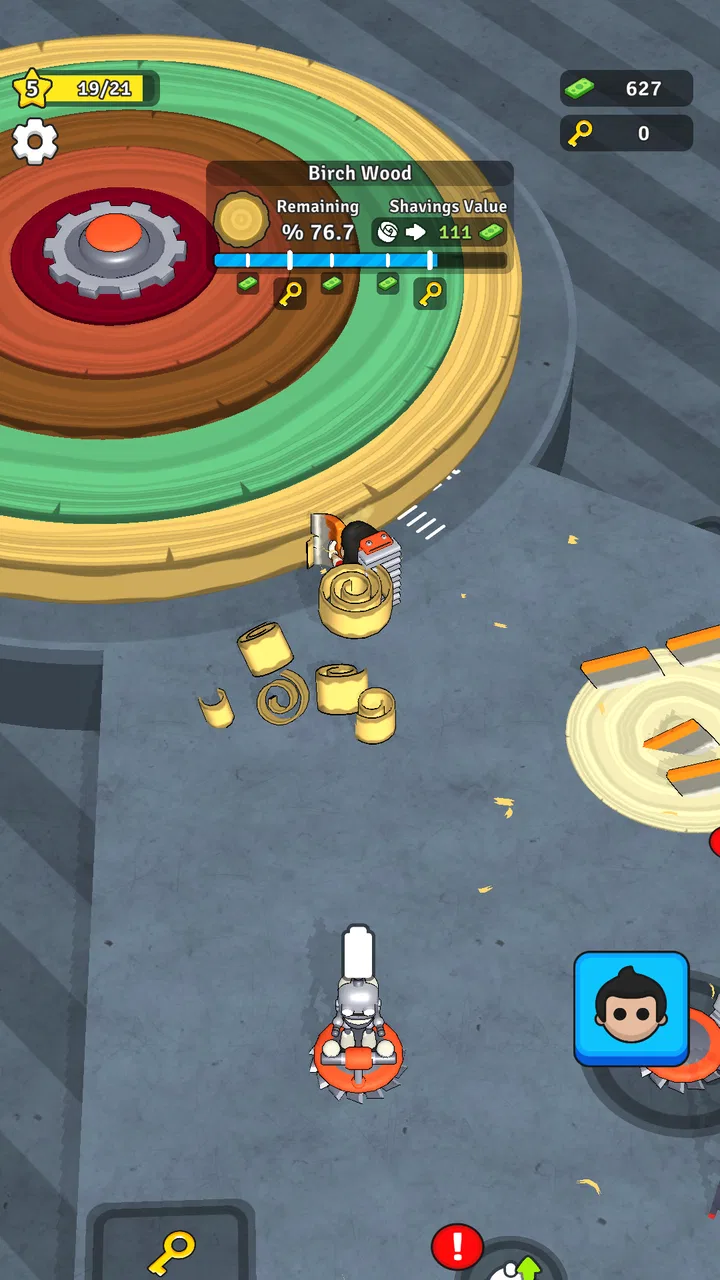
Carve Quest is a casual puzzle game centered on carving, shaping, and completing objects through short interactive challenges. During our review, the gameplay felt easy to understand: you follow visual guides, remove or cut material carefully, and aim to create the requested shape. Progress generally depends on accuracy, timing, and avoiding unnecessary mistakes rather than complicated controls.
02Is Carve Quest suitable for children and casual players?
Carve Quest is designed to be approachable, making it suitable for casual players who prefer simple mechanics and quick levels. The visual presentation and straightforward objectives are generally easy to follow, although parents should still check the game’s age rating, advertising, and in-app purchase information before allowing younger children to play. Difficulty may increase gradually as new challenges appear.
03Does Carve Quest require an internet connection to play?
The basic gameplay in Carve Quest may work without a constant internet connection, which is convenient for playing during travel or when mobile data is unavailable. However, certain features—such as advertisements, rewards, cloud-related functions, updates, or promotional content—may require access to the internet. Availability can vary by device and version, so testing offline mode after installation is recommended.
04Are there advertisements or in-app purchases in Carve Quest?
Like many free-to-download mobile games, Carve Quest may include advertising and optional in-app purchases. Ads can potentially appear between levels or when players choose to claim bonus rewards, while purchases may offer advantages such as removing advertisements, unlocking content, or obtaining additional resources. Review the store listing and payment settings carefully, especially if children use the device.
05What devices are compatible with Carve Quest, and is it free to download?
Carve Quest is generally distributed through official Android or iOS app stores, where the exact compatibility requirements, download size, price, and supported operating-system versions are listed. The game may be free to install, but availability and features can differ by region or device. Before downloading, make sure your phone has enough storage and meets the store’s minimum requirements.
Pros
- Simple controls make the game easy to pick up and play.
- Short levels are convenient for quick gaming sessions.
- Carving mechanics offer a distinctive twist on casual puzzle gameplay.
- Bright visuals give the game a cheerful
- approachable style.
- Progression provides a clear reason to keep completing challenges.
Cons
- Some levels may feel repetitive after extended play.
- Difficulty can be uneven
- with occasional sudden challenges.
- The game may offer limited variety once core mechanics are mastered.
- Ads may interrupt gameplay
- depending on the version and device.
- Players seeking deep strategy or a long story may find it lightweight.

Carve Quest
Gallery